


In previous chapters, we’ve explored what civilization is, the ontological shift required to transform it, and what open civic innovation looks like in practice. We’ve seen how islands of coherence can network together to create alternative systems capable of making old ones obsolete.
Now we must look directly at why this work is so urgent. As futurist Barbara Marx Hubbard said, “our crisis is a birth.” The systemic breakdowns we face aren’t random misfortunes — they’re the labor pains of a civilization giving birth to something new. But birth requires active participation. Understanding the depth and interconnected nature of our crises is essential to understanding what’s actually required of us.
Prefer to read the full thesis? Read a PDF
Our Context is Crisis, Our Crisis is a Birth
Source: Wiki
As renowned futurist Barbara Marx Hubbard said, “our crisis is a birth.” The systemic breakdowns we face necessitate the emergence of entirely new systems and ways of being, reconstituting, renewing and reimagining ancient cultural foundations at a planetary scale for the first time. Never before in our history has our existential self-destructive capacity forced us to understand at the planetary scale how to explicitly align the underlying agreements and mechanisms of human civilization with living systems principles. We have had the freedom, throughout our adolescent history as a species, to explore many different expressions of how civilization could be organized. Now, our exponential technologies, driven by rivalrous dynamics to the brink of total species annihilation, are offering us a choice. We can either learn how to design and bind the underlying agreements of our cultures and systems in alignment with living systems principles and the holistic stewardship of the well-being of our planet, shifting the fundamental context of our modes of production, consumption, and reproduction, or we will destroy ourselves. While this proposition seems daunting, this alignment is materially the only viable path through the eye of the needle available to us as a species due to the runaway feedback loops of exponential technologies.
Looking at the world around us, it isn’t difficult to see that we live in a world in crisis. Ecocide, biodiversity collapse, climatic shifts, extreme weather, mass climate migrations and refugees, catastrophic topsoil degradation and food system collapse, homelessness, mental health epidemics, ideological fragmentation and escalating polarization, chronic illness, wealth inequality and economic centralization, national and personal debt crises, inflation, the potential of peak oil, the rising costs of energy, resource extraction, genetically engineered bioweapons, the truth and meaning crisis, and severe social transformations and risk as Artificial Intelligence progresses are among the many runaway crises we face as a species. These converging crises are an existential threat to human civilization. At this stage in the exponential curve of multiple runaway crises, a collective fundamental phase-shift is extremely urgent. Interoperable transition methods and a shared sense of global human solidarity are critical to our species’ longevity and survival.
Underlying these seemingly distinct expressions of civilizational decay and collapse are a shared set of systemic dynamics reinforcing the exponential feedback loops that drive these anti-social and ecocidal patterns. As a whole, these patterns can be referred to as wicked problems, the polycrisis, or the meta-crisis. The self-referential quality implied by the term meta-crisis refers to the particular self-reinforcing quality of systemic feedback loops whose path-reinforcing dynamics make self-correction more and more difficult as time passes.
For example, in democracies around the world, the complex feedback loop of “regulatory capture” produces dynamics that undermine the public’s ability to utilize the mechanisms outlined in constitutional frameworks for representative self-governance. Many elected officials, even well-intentioned ones, are elected into office to make change, but by the time they have the power to make that change, they are often already so influenced or inhibited by the incentives of corporate campaign finance and duopoly institutional entrenchment that they cannot effectively represent the will of the people who elected them. These elected officials may make some nominal or superficial gestures toward transformational change, but ultimately they are beholden to the already-captured institutions that provision them with access to power.
regulatory capture
When a regulatory agency, established to act in the public interest, instead advances the commercial or special interests of the industry it is charged with regulating. This phenomenon happens when the regulated entities exert significant influence over the agency, leading it to prioritize their interests over those of the general public. As a result, the regulatory body may act in ways that benefit the industry rather than ensuring fair and effective regulation.
From the race to Artificial General Intelligence to the attention economy to military spending, multi-polar traps are system dynamics in which mistrust and rivalry force competing corporations and governments to continuously accelerate their tactics without regard for the consequences for and negative externalities to society. The behavioral dimension of a multi-polar trap is driven by the belief that “if I didn’t do it, someone else would.” This self-fulfilling logic, driven by an economic system that rewards these behaviors regardless of their existential risks they generate for humanity, creates a “race to the bottom” which risks the continuity of Life on Earth in favor of short term profits.
multi-polar traps
Situations where multiple actors, each pursuing their own self-interest, collectively contribute to a harmful outcome that none of them individually desire. This concept, rooted in game theory, illustrates how individual rational actions can lead to collectively irrational results. For example, in a competitive market, businesses might engage in practices that are detrimental to the environment or society to stay ahead, resulting in overall negative consequences.
tragedy of the commons
An economic theory that describes a situation where individuals, acting in their own self-interest, overuse and deplete a shared resource, leading to its eventual destruction. This occurs because each person benefits directly from using the resource, while the costs of overuse are distributed among all users. The concept was popularized by ecologist Garrett Hardin in his 1968 essay, where he illustrated it with the example of communal grazing lands.
In the contexts of socio-economic, technological, and military industrial systems, the system dynamics of multi-polar traps, the tragedy of the commons, and recursive accumulation of wealth and power form a nearly impenetrable mess of misaligned incentives and runaway feedback cycles. In an ideal world, democracies would provide a countervailing influence on unrestrained, centralized corporate power, but the same forces that drive extractive and anti-social behaviors in the corporate sector have overtaken our democracies.
Seen in this context, the meta-crisis is a coordination and adaptation failure, a civic crisis stemming from the long term effects of separation, rivalry, and the consolidation of wealth and power on the public’s ability to govern itself effectively. If markets, governments, and multinational corporations are systemically incapable of coordinating a response to the interconnected crises we face, it becomes self-evident that reformist efforts are ultimately insufficient to address our crises at the root. In actuality, despite the techno-optimism that occurs in elite conferences around the world, corporate-driven reformism not only distracts from the underlying system dynamics but also prolongs the perceived legitimacy of legacy institutions. While holding actions can slow the progression or reduce the harm caused by these systems, the systemic and self-reinforcing nature of these runaway processes implies that much deeper transformational actions are required to preserve the continuity of human civilization and perhaps even Life on Earth.
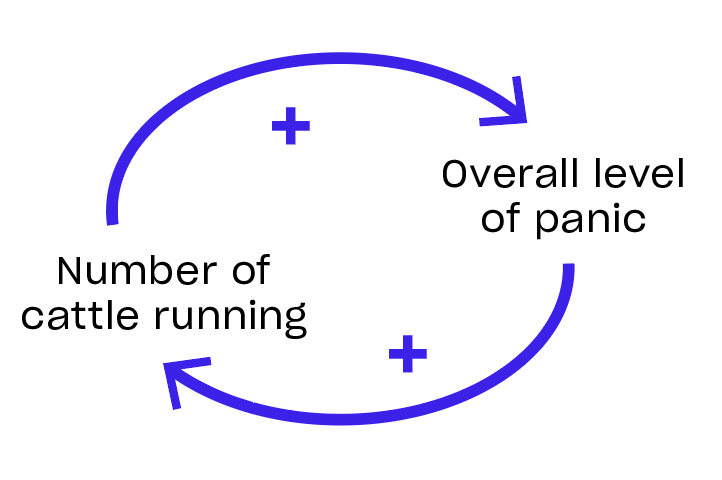
In short, the meta-crisis represents a nested set of feedback loops that not only drive exponential acceleration of existential risks but increasingly undermine our collective capacity to address those risks within the internal processes of our captured systems. In both our democracies and economies, these systemic drivers of runaway crises have consumed and undermined the capacity of elections and markets to mitigate them. Thus, we as a public have no choice but to formalize our own civic systems that address the failure modes of our current systems.
whole systems design
An approach that considers all components of a system and their interrelationships to optimize overall performance and sustainability. It involves understanding how different elements within a system interact and influence one another, aiming to create synergies and leverage points for improvement. This method is often used in fields like architecture, engineering, and environmental planning to ensure that all parts of a system work together harmoniously.
The meta-crisis is, at root, a coordination and adaptation failure — a civic crisis stemming from the long-term effects of rivalry, separation, and the consolidation of wealth and power. If markets, governments, and corporations are systemically incapable of coordinating a response, it becomes self-evident that we must formalize our own civic systems. In our next chapter, we’ll explore the three probable futures that emerge from current dynamics — and why the “third attractor” of distributed coordination is humanity’s narrow path through the eye of the needle.
Series:
Chapter 5: Our Crisis is a Birth ← This Chapter
Chapter 6: The Three Attractors
Chapter 7: A Post-Tragic Protopian Audacity
Chapter 8: Open Civic Culture
Chapter 9: Open Civic Systems — Architecture & Transformation
Chapter 10: Open Civic Systems — Design Principles & Living Systems
Chapter 11: Our Choice