


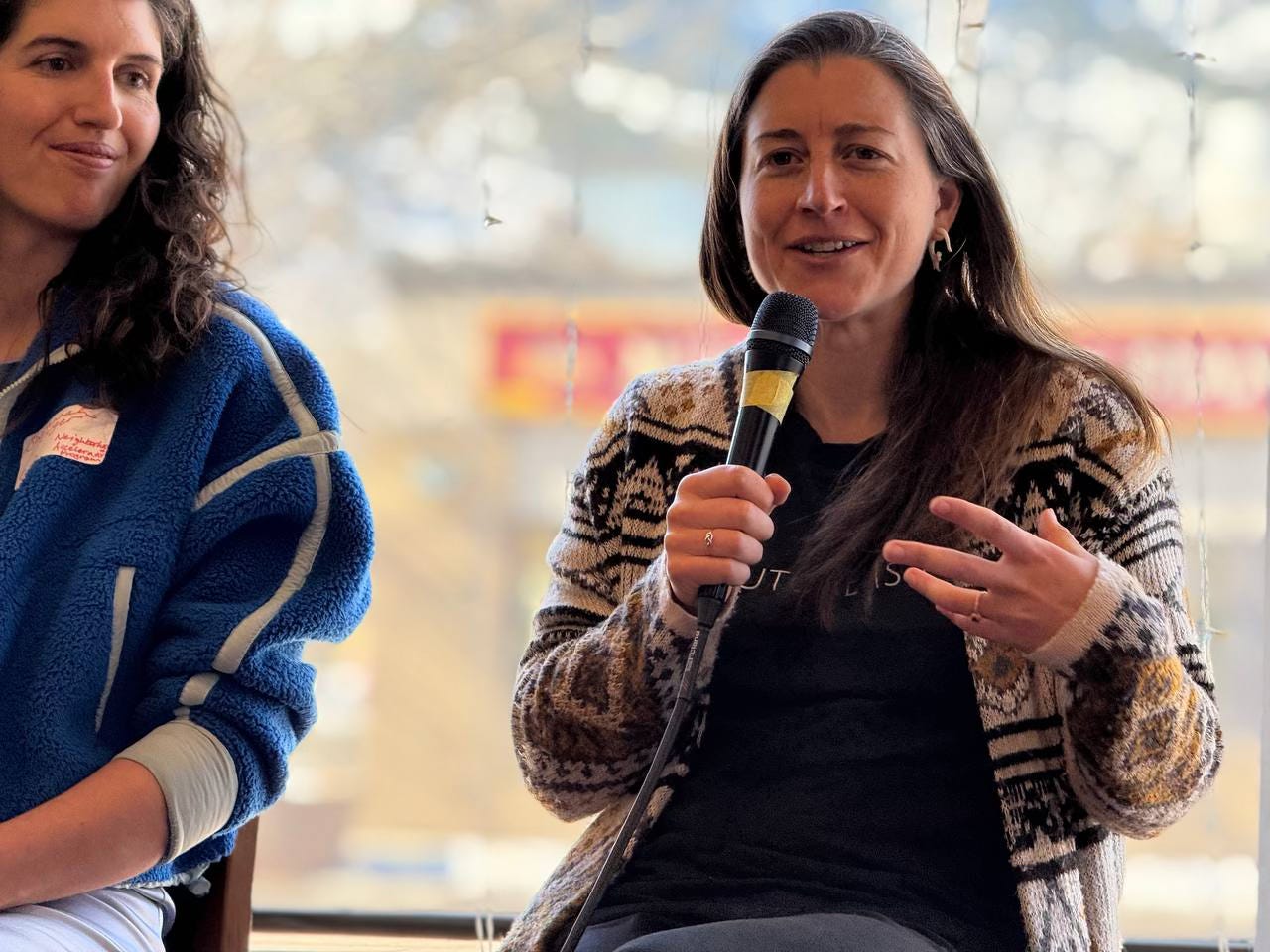
The third iteration of A General Forum on Ethereum Localism (GFEL) in Boulder carried forward and expanded the momentum from its Portland origins, establishing itself as an emergent, forkable protocol for convening localists, blockchain builders, and regenerative economy practitioners. Hosted in partnership between the Portland-based Ethereal Forest crew and previous GFEL attendees alongside Boulder-based allies The Riverside, Woven Web, OpenCivics, Boulder Commons, One Local, The Regen Hub, and The Wheel Collective, the event provided a clear example of the ethos of cosmo-localism in action—leveraging shared global knowledge while deeply rooting in local context.
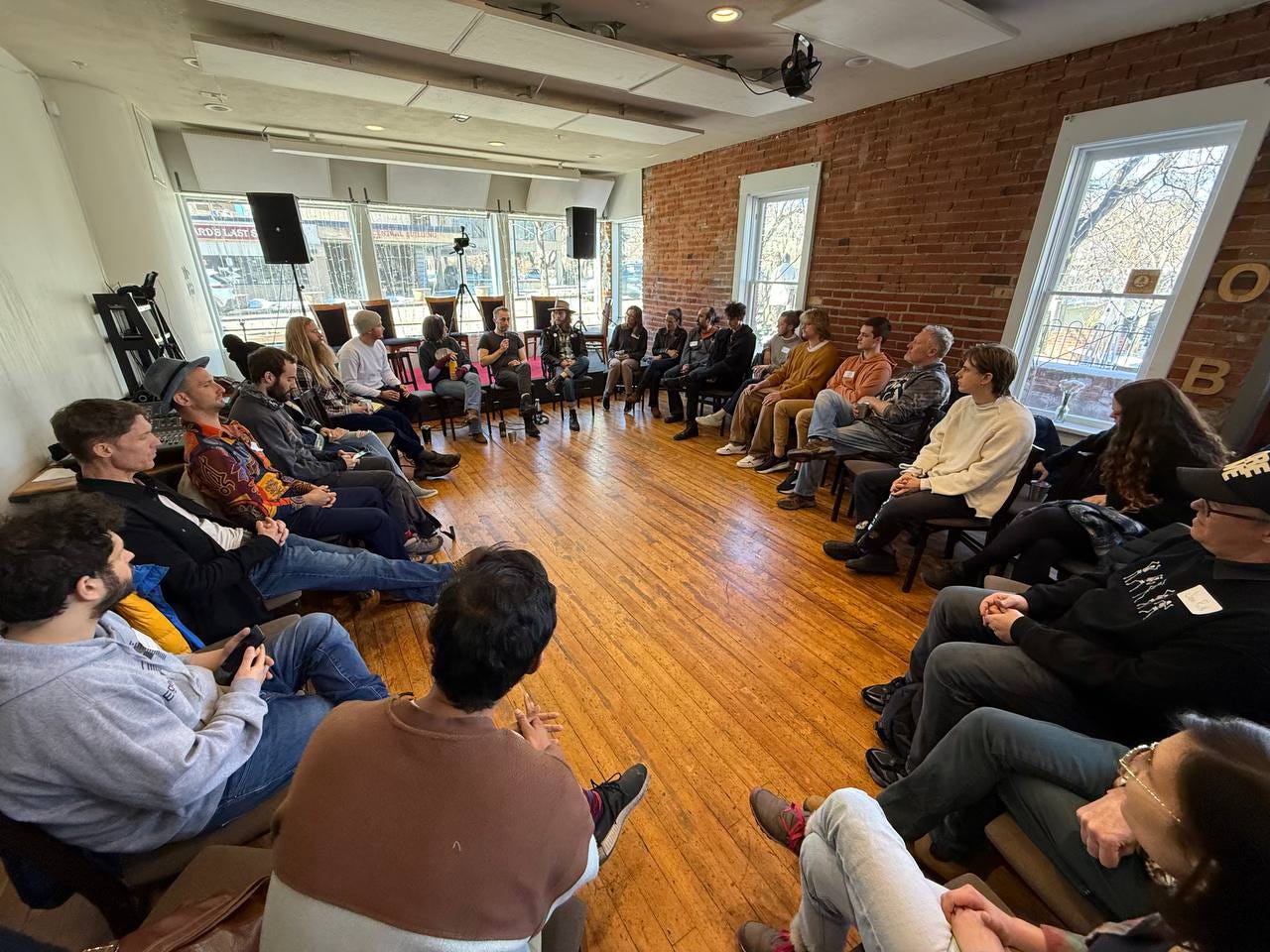
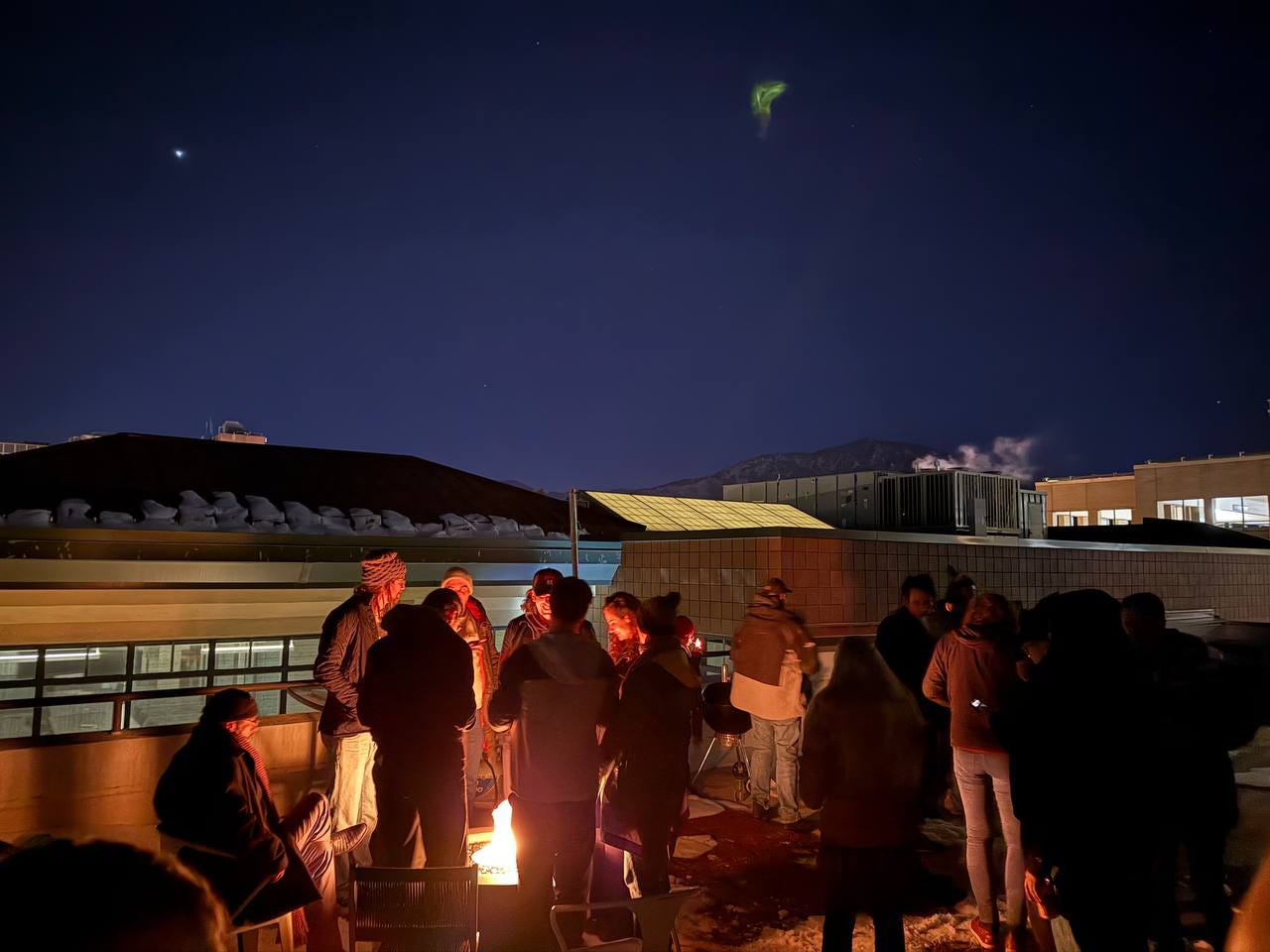
From February 21st-23rd, 2025, Boulder became a node in a growing decentralized network of Ethereum localists, activating spaces of inquiry, collaboration, and experimentation. The gathering featured unconference sessions, panels and participatory fishbowl dialogues, and a celebratory closing event that showcased local community initiatives and Boulder-based musicians. A core experiment in the closing event was the real-time community allocation of a $5K matching pool to community groups, distributed via quadratic voting on an app custom-built for community budgeting by our friends and sponsor, Allo.Capital.
GFEL Boulder wouldn’t have been possible without the generous support of The Ethereum Foundation, Gitcoin, Celo Public Goods, and Public Nouns, all of whom contributed towards the matching pool for local non-profit and community organizations in addition to providing scholarships for all participants who needed them.
We’re incredibly grateful for their trust and support.
GFEL Boulder was more than just another Ethereum conference—it was a living, breathing experiment in cosmo-localism, a convergence of global knowledge-sharing and local self-determination.
The gathering explored what it means to reclaim economic sovereignty, strengthen local resilience, and coordinate across planetary scales using Ethereum and other tools. With a focus on practical implementation, the event surfaced concrete experiments in local governance, mutual credit, commitment pooling, and regenerative finance.
Here’s a deeper look at the rich conversations and key insights from thematic panels and discussions that shaped the weekend.
Unconference Sessions
True to its decentralized spirit, GFEL Boulder was an unconference—an open, self-organizing format where participants proposed and facilitated their own sessions. The topics explored ranged from technical and economic frameworks to deeply cultural and existential inquiries about collective governance, storytelling, and planetary-scale coordination. Some standout sessions included:
Cosmo-local Federation Formation – Designing governance models that link localists and builders through shared funding, information, and coordination infrastructure.
DAO Tooling & Community Councils – Exploring how decentralized autonomous organizations (DAOs) can support grassroots organizing. Several DAO tool demos were shared including Conviction Voting and staking as a governance signal.
Planetary AI & Ecological Intelligence – Discussing AI models that enhance decentralized decision-making for ecological stewardship and expand the ways in which we can interact with and relate to the intelligence of nature.
Open-ended Mutualism – A pluralistic and creative exploration of collaborative and participatory design of mutual aid infrastructure.
Ethical Capital Formation – Reimagining finance to prioritize reciprocity over extractive models.
Regen Movement Mapping – Visualizing and coordinating the growing network of regenerative finance and local economies.
Obstacles for Local Builders – Addressing barriers to localist organizing as well as corresponding solutions.
Commitment Pooling - An interactive exercise to learn how commitment pooling works in contrast to traditional monetary systems.
AI Hyperstition – Speculating on how stories and mythologies shape the development of decentralized tech.
Collaboration Monsters – Creating new kinds of networked inter-organizational structures that enable aligned groups to swarm together via novel legal and governance mechanisms.
These sessions reflected the diversity of perspectives present—bridging blockchain developers, urban planners, cooperative economists, artists, bioregionalists, and community organizers.
Panel Highlights
Local Coordination
Weaving a Community Network That Sees Itself
This panel dug into the mechanisms of local coordination—not just the technology, but the cultural and relational layers that underpin any functional localist economy.
Cameron Murdock (One Local) shared his experience with creating a local mutual aid network during the pandemic. He described how the act of planting 7,000 vegetable seeds in an abandoned parking lot led to the development of a cooperative digital platform that tracks and distributes community resources.
Nidhi Harihar, working with Voice Deck to ensure decisions are taken closest to the people they impact, reflected on urban coordination, emphasizing that in a highly dense city, daily life is deeply interwoven, yet modern economic structures create artificial barriers between people. This realization drove her to work on digital systems that restore social ties in the urban fabric.
Nidhi also spoke about using blockchain to fund citizen-driven impact on the ground. She connected this to her experience in Auroville, India, an experimental self-governed city, where communal governance flourishes but also struggles with power dynamics.
One of the most memorable quotes came from Cameron:
“One of the best technologies we have is still just knowing each other. We can talk about DAOs all day, but the most effective mutual aid networks still function through people who know where the food is, where the money is, and who needs what.”
This panel illuminated the essential pragmatism of community organizing: technology can amplify coordination, but it can’t replace the trust-based social fabric that makes localism work.
Climate & Bioregional Stewardship
Grounding in Place Without Losing Global Solidarity
A theme throughout this panel was oscillation—the need to zoom in on local ecological stewardship while maintaining planetary solidarity.
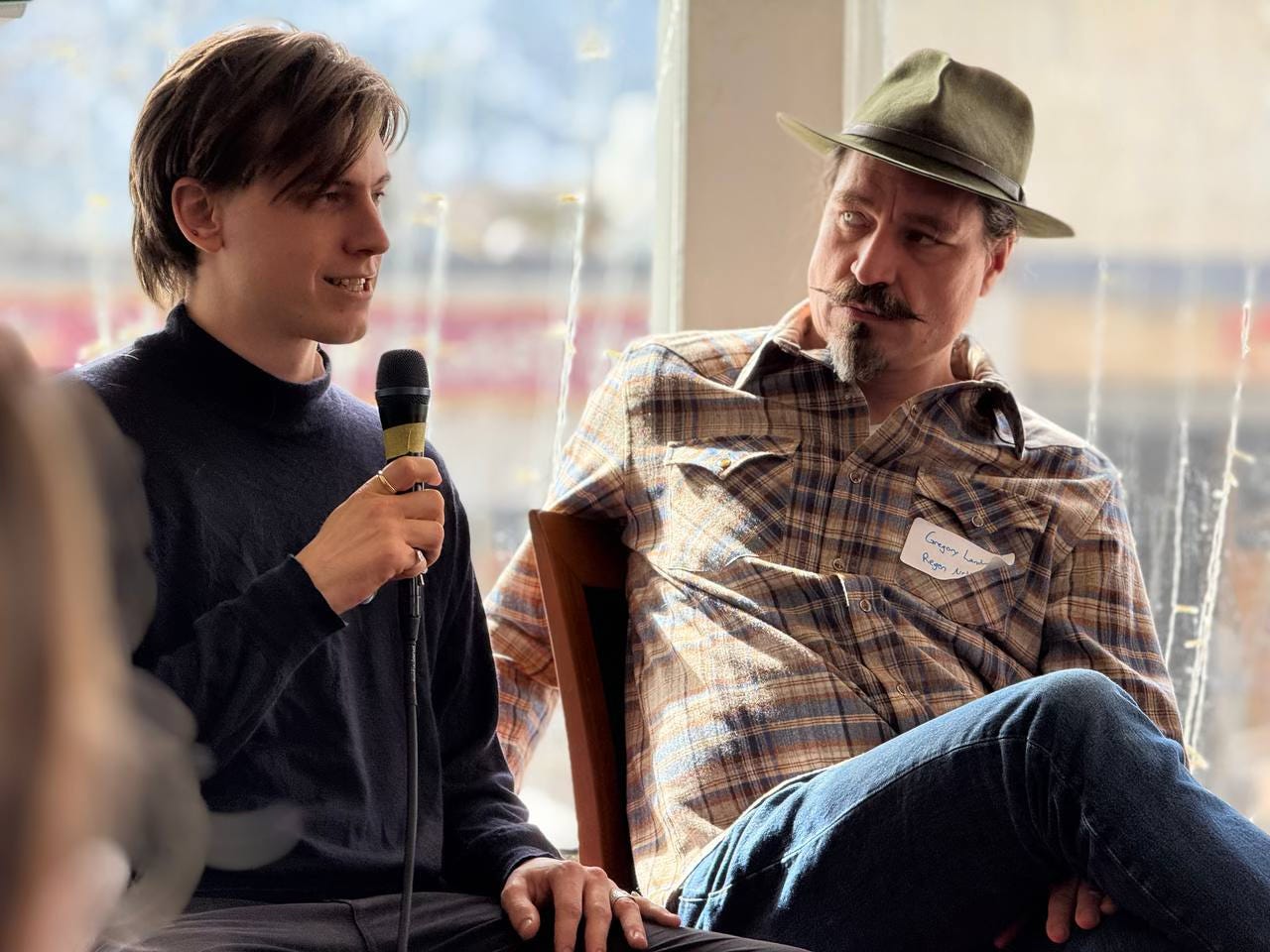
Gregory Landua from Regen Network described how carbon markets often miss the mark by prioritizing abstract credits over relationships with land stewards. Instead, he emphasized the importance of bioregional DAOs that actually fund people doing the work.
Gregory also shared a powerful personal story about salmon fisheries, exposing the deep contradictions in so-called “sustainable resource management.” He recounted how, as a fisherman, he spent days burning diesel to find salmon, while knowing full well that they were all heading upriver to spawn. In contrast, Indigenous fishing practices used fish wheels that required no fuel and took only what was needed.
Colleen Chase, co-founder of Solar Foundation, spoke about experiencing the inequalities of wildfire response firsthand. Wealthier homeowners were able to hire private insurance and security teams to protect their homes, while working-class residents—often employed in those same homes—had nowhere to go, no way to leave, and had to keep working through the disaster.
One of the most stirring moments came when she described watching her daughter develop asthma from wildfire smoke:
“I used to think climate was about science, but now I feel it in my body. It’s in my lungs. And I see it in my kids. The land is crying, and we have to listen.”
This panel cut through greenwashing rhetoric and surfaced real questions about power, extractivism, and economic justice in the climate space.
Local Economies & Alternative Finance
What Comes After Money?
This panel featured visionaries in complementary currencies, blockchain-based economic coordination, and regenerative finance, discussing how to build economic sovereignty beyond extractive financial models.
Njambi Njoroge (Grassroots Economics) described how commitment pooling—a system where communities guarantee shared obligations without cash—has enabled local economies to flourish without dependence on national currencies.
Will Ruddick (also Grassroots Economics) connected this to historical mutual aid practices, sharing how cooperative labor pools and local credit systems have functioned for centuries before money.
Nathan Schneider (CU Boulder, Media Economies Design Lab) spoke about the potential for cooperative media ownership, arguing that platforms like Patreon and Substack could be radically reimagined as member-owned economic systems.
Azuraye Wycoff, a farmer and business owner from Yellow Barn Farm, described the challenge of running a regenerative agriculture operation within an economy that doesn’t value soil health. She called for land-backed cooperative finance that allows farmers to build wealth in their land without selling out to developers.
One of the most provocative insights came from Scott Morris (Citizen Wallet):
“We talk about ‘fixing’ money, but maybe money itself is the problem. When we say ‘money,’ what we really mean is power over others. We don’t need ‘better money’—we need better ways of trusting each other.”
This panel pushed beyond crypto hype and into fundamental questions of economic design, asking how we replace markets of competition with networks of care.
Narrative Shifts
Breaking Out of Outdated Stories
The most philosophical and politically charged discussion of the weekend, this panel took aim at the ideologies shaping Web3, global finance, and governance.
Exeunt opened with Umberto Eco’s 14 points of Ur-Fascism, drawing eerie parallels between historical fascist movements and modern corporate control of digital infrastructure.
A participant referenced Antonio Gramsci, saying: “We are living in a time of monsters—the old world is dying, but the new one is struggling to be born.”
There was heated debate about capitalism and communism, with some arguing for crypto-socialism, while others pushed for post-capitalist models that transcend old political binaries.
One of the most electric moments came when someone declared:
“We aren’t here building products. We’re building economies. We have to stop acting like startups and start acting like revolutionaries.”
This session underscored a key tension in Ethereum Localism—how to harness decentralized technology without reproducing the same systems of control and exclusion that Web3 claims to oppose.
Conclusion
A Living Protocol for Localist Experimentation
One of the key takeaways from GFEL Boulder was the evolution of the forum itself. Originally sparked in Portland, the event is not a centralized brand, but an open protocol that can be forked, adapted, and remixed by local organizers worldwide. The collaboration between Boulder and Portland teams demonstrated how GFEL can spread as a decentralized pattern—each iteration uniquely shaped by its local context.
GFEL Boulder affirmed that Ethereum Localism isn’t a tech stack or an ideology—it’s a living experiment in place-based coordination, weaving the local and the planetary.
The most striking takeaway from GFEL Boulder was its refusal to be a static event. Instead, it functioned as a living experiment, a collaboration monster, an emergent protocol that decides for itself where to go next.
With whispers of Berlin, Bangalore, Mexico City, and Amsterdam, the movement is alive and mutating. Wherever it lands next, it will be a testament to the power of self-organizing networks to reshape the world from the ground up.
Overheard At GFEL Boulder: Quotes From The Weekend
“Everything that is heavy should be local and everything that is light should be global and shared.”
— Referencing Michel Bauwens
“We’re not trying to put the sage on the stage. The people up here are not the saviors we’ve been waiting for—they’re here to inspire you into the work that you’re here to do.”
— Benjamin Life
“Local coordination is about acting as one organism.”
— Nidhi (VoiceDeck)
“One of the best technologies that we have are still just those of us who are those central hubs, those nodes in the mycology where a bunch of information is flowing.”
— Cameron Murdock (One Local)
“We wanted to create this frame, this 10-day space and time, where it felt like the community was much more interconnected and activated.”
— Eileen Walz (Woven Web)
“We are trying to create a world where people are actually paid for doing the work of tending to communities and our commons and our planet.”
— Benjamin Life
“Climate change is this wake-up call for humanity realizing how mutually interdependent we are.”
— Ale K
“We know that the salmon are all going up the river, but we can’t coordinate ourselves as a society to accept that abundance in a good way.”
— Gregory Landua
“My daughter says she doesn’t think she wants to have grandkids. I want grandkids. My gosh.”
— Coleen Chase
“Why is it that we have to force ourselves to play these strange competitive economic games in order to ‘manage’ this resource?”
— Gregory Landua
“Over hundreds of years, the Global South and our Indigenous cultures have cultivated and maintained deeply interpersonal economic relationships based on trust, communal dialogue, consensus building.”
— Njambi D. Njoroge (Grassroots Economics)
“We are not reinventing anything. We are just adding on technology to exactly what has been happening and what is still happening.”
— Njambi D. Njoroge (Grassroots Economics)
“We talk about ‘fixing’ money, but maybe money itself is the problem.”
— Scott Morris (Citizen Wallet)
“We aren’t here building products, we’re building economies.”
— Zachary Marlow
“Ethereum as a substrate is a place where we can organize. And localism is where that change really matters and needs to be rooted in place in service of people and ecologies and communities.”
— Benjamin Life
“We’re really trying to find ways to communicate across differences and build real functional solidarity to create grassroots systemic change.”
— Benjamin Life
“So this inquiry that we’re exploring this weekend is: what is the relationship between that global solidarity and that local action?”
— Benjamin Life
“We’re in a time of monsters. The old world is dying, and the new one struggles to be born.”
— Referencing Antonio Gramsci
“This archaic, ancient coordination system we call the free market… we just have to move beyond it.”
— Unknown Speaker
“We are stuck in a bad story that is driving us—terminally—toward something that doesn’t work.”
— Unknown Speaker
“This isn’t communism, this isn’t capitalism. We are beyond those binaries.”
— Unknown Speaker
“The best thing we can do right now is build bridges—between ideologies, between communities, between movements. That’s the real infrastructure.”
— Unknown Speaker
“We don’t need better money. We need better ways of trusting each other.”
— Scott Morris (Citizen Wallet)
“At the end of the day, the measure of a regenerative economy is simple: do people have what they need to live, with dignity?”
— Nathan Schneider (CU Boulder)