


Before we share multiple significant updates and ways you can re-engage with the OpenCivics community in 2026, we want to share our new Theory of Change video (7 minutes) that summarizes the foundational thinking and approach behind OpenCivics.
This overview video for the movement is intended to be complimented by deeper dives into our philosophy, practice, and network (coming soon). We hope the video leaves you feeling inspired and aligned with the shared work ahead.
Please share it with someone you think needs to see it.
The Great Turning Underway
Across the planet, people are already building what comes next. In kitchens and community centers, on Discord servers and in watersheds, people are experimenting with new ways to coordinate, govern, and care for each other.
This work is often invisible. It happens in fragments, isolated peers that don’t know about each other, reinventing wheels and unnecessarily starting from scratch, patterns that never get shared.
Today’s civic fabric is thin, fragile, and centralized. We’ve outsourced responsibility to distant institutions, watched our commons get privatized, and seen trust unravel into polarization. But a different paradigm is emerging — one where civic life becomes more participatory, resilient, and vital through shifts in our values and everyday practices.
The OpenCivics Movement is emerging to change that. To support shifts from a thin, fragile, centralized ‘closed’ civic fabric to a vital, resilient, participatory ‘open’ civic fabric that’s fractal and practiced everywhere, every day. To create the conditions where open civic allies, innovators, organizers, and patrons can better find each other, build and learn together, and share what’s working.
OpenCivics’ development began in 2022 with the Network soft launched (live but not amplified) at the end of 2023. Over the course of the Network’s first year, we onboarded over 70 members and distributed several hundred thousand dollars in grant funding. As the Network grew, it became clear that we needed to more thoroughly define the core underlying design philosophy and theory of change we wanted to channel the collective efforts of the Network towards. We also knew that we needed a progressive protocolization plan to decenter ourselves as Stewards and support self-organization across the network. Through that process, we also discovered that we needed a Labs to advance the field of open civic innovation through strategic collaborations and open source knowledge creation.
At the end of 2024, we published our progressive protocolization plan and began working on the foundational building blocks for the Consortium and Labs. We paused membership applications under the pretense that this process would be relatively concise. It ended up taking about a year.
During this time we are happy to share that we have nurtured a thriving Labs and we’ve methodically developed the conceptual and functional foundations needed for the next phase of the Consortium’s collaborative work. Important groundwork, but still largely concept exploration and ideas on paper.
That’s ready to change now. We’re in the midst of crossing a threshold. What we refer to as phase one into phase two. The foundations are set, the infrastructure is live, and the network is ready to function as more than a vision.
Open civic innovation is becoming a living, community-led practice.
From Concept to Practice
When we launched OpenCivics, we knew a small stewardship team could spark something, but a movement that lasts has to be able to organize itself.
We’ve spent this past year building what that actually requires: not just ideas, but infrastructure. Not just philosophy, but pathways for participation. Not just a thesis, but the rituals and rhythms that let a distributed community coordinate, learn, and act together.
The scaffolding is in place. Now we need to bring it to life together.
Completing this transition requires more three steps:
Re-engage our community — Reconnect with members, welcome new ones, and activate the relationships that make a network more than a mailing list.
Start our new rhythms — Host assemblies, councils, and gatherings that create consistent opportunities to connect and collaborate.
Resource our efforts — Sufficiently fund the infrastructure, populate the knowledge commons, and build the capacity to sustain this work.
None of this happens without you. Here’s where we are and how to plug in.
What This Transition Into Phase 02 Means For You
OpenCivics is a community of practice and solidarity network, not another organization that takes up all your time.
The vast majority of your time and attention as you engage with OpenCivics stays on your own work — the projects, activities, and efforts you’re already engaged in. OpenCivics exists to support, connect, and resource your existing life’s work.
A smaller slice of your time engaged with OpenCivics goes toward connecting with peers, sharing what you’re learning, and finding collaborators.
And an even smaller slice, if and when it calls to you, goes toward evolving the field and helping the network run well.
The goal is that engaging here gives you energy and connection. If it starts feeling like another obligation draining your attention, we’re doing it wrong.
Step One: Re-Engage Our Community
A network is only as alive as the people participating in it. We’ve built infrastructure, but infrastructure without relationship is just empty scaffolding.
What we’re asking:
Reconnect. If you’ve been on the periphery, now is the time to weave back in. Explore what’s new. Lean into what resonates. Share your own updates.
→ Subscribe to our Luma Calendar and Substack
Update your membership. Help us know who you are and what you’re working on so we can connect you with the right people.
Make your work visible. Index your activities, peers, and resources so opportunities for collaboration can emerge.
Invite others. We’re ready to onboard new members. If you know someone who should be here, point them our way.
What we’ve developed to support this:
WEBSITE — A redesigned website with clear entry points and the full story of what we’re building
→ opencivics.coWIKI — A wiki organized around our foundational documentation: thesis, concepts, framework, and network
→ wiki.opencivics.coPORTAL — A private workspace for Consortium members to coordinate, collaborate, and connect
→ portal.opencivics.coCOMMONS — A living map of what’s happening in the field
→ commons.opencivics.coFORUM — A place to discuss Consortium proposals with clear posts and threads to guide the dialogue. Available to consortium members (requires invite).
BROADCAST — Our primary broadcast channel for sharing network updates, case studies, civic innovator spotlights, reports, and notes from the field.
Step Two: Start Our New Rhythms
Connection doesn’t happen by accident. It requires consistent, reliable spaces where people can show up, find each other, and build trust over time.
We heard clearly that members want this. So we built the scaffolding to more effectively support it.
The core rhythms we’re launching:
Bi-weekly Network Assemblies — Open to all network members. Designed for connection, peer learning, & finding collaborators. It’s where we amplify you and your efforts through open civic innovator sessions and open space.
Monthly Delegate Council, Governance Sessions & Quarterly Advisor Council — For those going deeper into network coordination.
Quarterly Strategy Reviews — Transparent check-ins on where we’re headed.
Annual Summit — A gathering to share critical work across the field.
What we’re asking:
Attend an Assembly. They are every two weeks, rotating for timezone. Put it on your calendar. Even if you just listen, your presence matters.
Bring something to share. A question you’re sitting with. A project you’re working on. A pattern you’ve noticed. These gatherings are peer-driven.
Commit to consistency. The magic happens when people keep showing up. Relationships deepen. Collaboration emerges.
What to do:
→ Subscribe to Calendar
→ Join Community on Telegram
Step Three: Resource Our Efforts
The developmental work of the past two years has been almost entirely volunteer. Patricia and Benjamin have been building towards this vision pro bono while sustaining themselves through external projects, and more recently, Labs consulting work. This model is not sustainable, and it limits what’s possible. We’ve been waiting until our asks and offers are clear, to have demonstrated the value of the ecosystem, and established mechanisms to support consistent flow funding.
As of today, OpenCivics has helped to distribute over $360,000 USD in community-led grants from over a thousand donors. We have convened a network of over 190 open civic allies, innovators, organizers, and patrons and that represent over 200 organizations. We’ve hosted gatherings and catalyzed collaborations across three continents.
But for this movement to fully mature, it needs to be supported by sufficient resource flows. That means securing initial financial funding, but it also means populating the knowledge commons with the resources and directories that make open civic innovation reproducible, to demonstrate possibility in action and further support this emerging field by making the value of our work more visible.
Funding Pathways
Donate to OpenCivics Consortium to support Network stewardship, operations and developmental activities → Make a Donation
Engage with OpenCivics Labs in a direct collaborative engagement → Book a Call
Partner with OpenCivics Fund to direct flow funding to Network activities and resources → Book a Call
Why Funding This Work Matters
With your support, OpenCivics is set to grow into a vital network capable of responding to the rising crises of our moment by:
Coordinating the research, documentation and sharing of critical and urgently needed open protocols for community-led resilience and local organizing.
Supporting facilitation, templates and coordination for distributed, community-led colabs, swarms of self-organized activity to meet real local needs.
Providing compensation for Network Stewards, Delegates, and Contributors to provide network coordination and infrastructure support to the movement.
Hosting digital and physical convenings to strengthen the open civic innovation domain and contribute towards shared efforts in bioregional organizing, local resilience, and community-led infrastructure design.
What we’ve built to support this:
Fiscal Sponsorship from Buckminster Fuller Institute — Allowing us to receive tax deductible donations today to sustain our work coordinating systems-scale innovation.
Updated Consortium Constitution & Participation Pathways — Clearer membership roles from Ally → Citizen → Contributor → Delegate → Steward, plus Partner roles for organizations and Advisor roles for individuals.
OpenCivics Labs — Our cooperatively-owned consulting guild, which has been practicing open civic innovation with partners like Buckminster Fuller Institute, Indigenous Commons, Center for Ethical Land Transition, and Regen Network.
New Theory of Change Series — Content walking through how the philosophy, practice, and community compose the movement (coming soon).
What We Learned Through Labs
Over the past year, OpenCivics Labs served as our applied R&D environment. We didn’t just theorize about open civic innovation — we practiced it, working with partners like Buckminster Fuller Institute, Indigenous Commons, Center for Ethical Land Transition, and Regen Network.
Those collaborations let us test our methodology in real contexts.
Labs continues as a cooperatively-owned consulting guild for partners who want support designing networks, governance systems, or coordination infrastructure.
Over the coming weeks we’ll be beginning to public open source resources in the commons and publish case studies from nearly a dozen experiments in the field.
The Invitation
The movement is coming alive. But a movement isn’t something that happens to you, but through you. Here’s how to participate in this moment of transition.
Re-engage:
Visit the Member Portal
Update your membership
Index your activities by posting them on Telegram
Show up:
Come to a Network Assembly
Join the conversation on Telegram
Resource the work:
Donate to support network infrastructure
Contribute to the Knowledge Commons
Apply as a Partner to fund something together
Talk to OpenCivics Labs about building something together
Spread the word:
Invite someone who should be in the Network
Share our Theory of Change video
What’s Next
The foundations are set. Now we’re bringing them to life together.
We’ll keep you posted through regular updates. And we want to hear from you, what’s working, what’s confusing, what you need.
We’re glad you’re still with us on this journey after all these years of building toward this moment, a moment when the world needs us to work together more than ever. The path ahead won’t be easy as we respond to the long disaster of collapsing systems and rising authoritarianism, but it will be possible because we’re together.
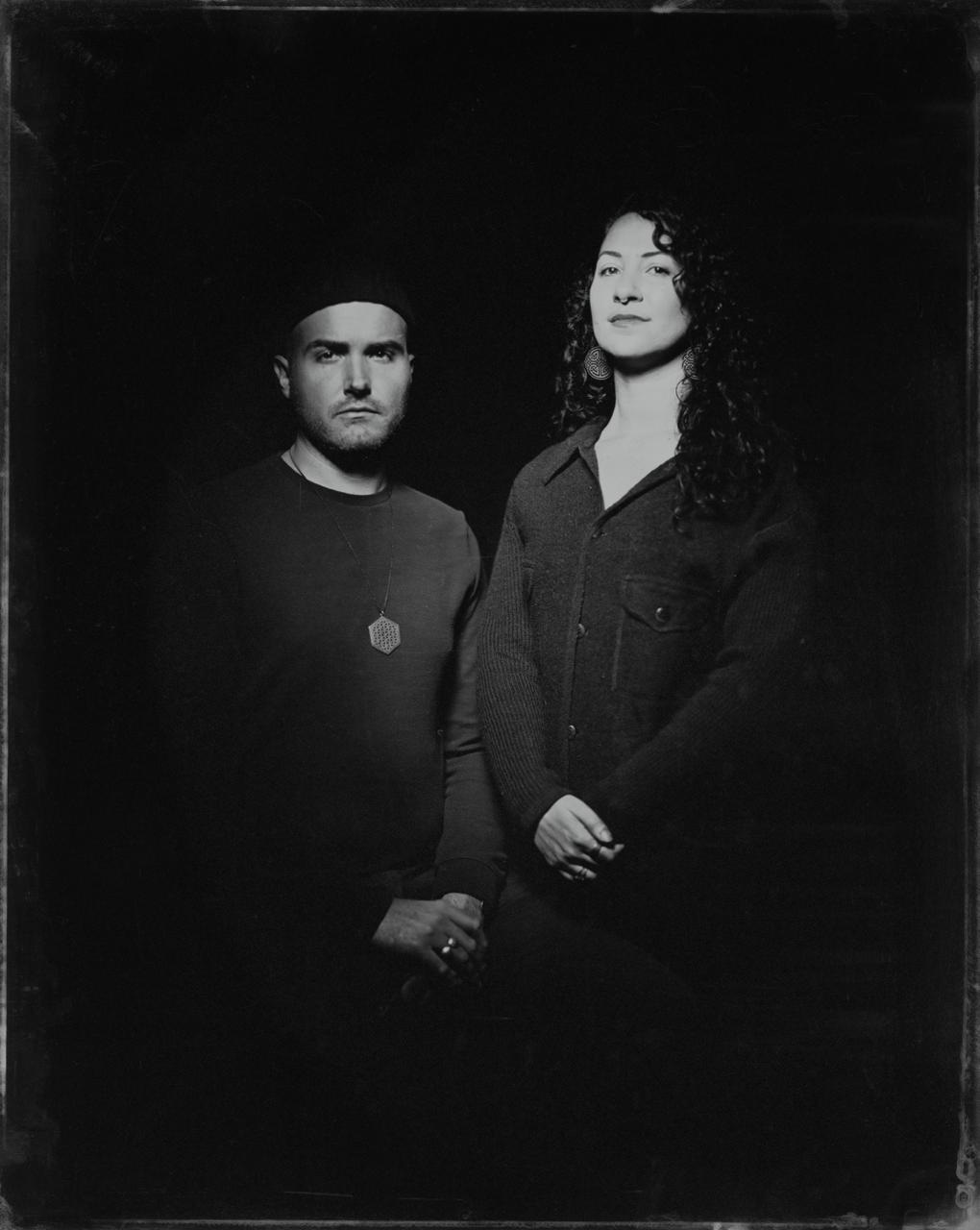
In Us We Trust,
Patricia & Benjamin, OpenCivics Stewards
Lets goooooo 👏👏👏 congrats on this big launch, hyped for the next phase together 🤝🤝🤝
This is amazing! I’m excited to be following along and look forward to getting a sense of where and how best to engage.