


Welcome to Towards an Open Civics, a thesis offered openly to the commons by the OpenCivics Network. Over this series, we’ll be sharing this thesis with you in digestible chapters — not as a manifesto demanding allegiance, but as a seed inviting adaptation.
This isn’t a blueprint for a perfect utopia. It’s an invitation to imagine, together, what a life-affirming civilization could look like — and to build the civic infrastructures that might carry us there. We hope these words move through you as they have moved through us.
Prefer to read the full thesis? Read a PDF
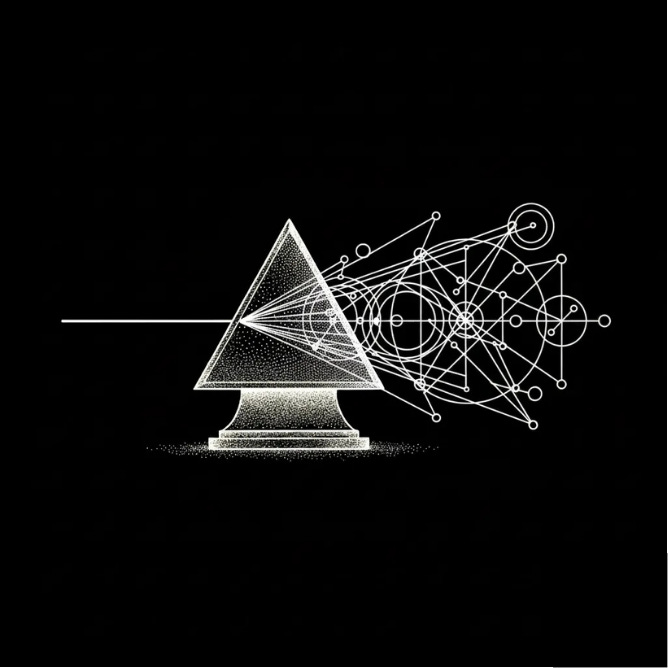
In Us We Trust
Source: Wiki Link
This document is offered openly to the commons. This work claims no author; those who have contributed to the various streams present in the following pages are many. You might even say we are legion. Because, despite our unique geographic, historical, and cultural contexts, we are speaking with a unified voice. This voice moves through us. We hope it will move through you also as you take in these words and find whatever is good and true and and beautiful and useful to you among them.
This document has been created for civic innovators, organizers, and patrons as an argument for the decentralization of civic innovation and revitalization of civic systems in service of the transition towards a life-affirming civilization. It makes the case for the urgent creation of new coordination mechanisms in response to the existential mandate for humanity to evolve into a non-rivalrous, mutually responsible civilization.
We offer these words as a clear and simple prayer, that we might embrace the all-encompassing sobriety of collapse with an all-encompassing love for our fellow human beings and their sovereign rights to vitality, resilience, and choice. We do not claim to have invented these rights, rather we see them as intrinsic to the nature of love and interbeing, a sacred foundation of mutuality that is rooted deeper than any religion, culture, or creed.
OpenCivics is not a brand or business; it is a spark to ignite a renaissance of civic participation and stewardship, a recognition of our shared belonging to and responsibility for our world. OpenCivics is an invocation of a broader movement towards an open civics — a collective and evolving field dedicated to reimagining civic systems through participatory design.
While the words in this document are already dead, flattened expressions, they point to something alive, a spirit that lives within all of us that yearns for a more beautiful world.
This document is a seed, published under a copyleft open-source license as an invitation to all to adapt, expand, and evolve its contents, fueling an ongoing exploration of what it means to enact an open civics. It serves as a “living blueprint,” designed to spawn new ideas, respond to emerging challenges, and address societal needs through collective input and iterative development.
We are here to collectively imagine and dream a different kind of future into being, and, if you’re reading these words, that journey has already begun within you. The whispers of that future live in the words that follow.
These words are dedicated to all those who have carried the vision of a world based in consent, trust, and mutual benefit – but did not live to see its ultimate arrival.
Their dream now lives within us to carry forward.
To connect the words within these pages with your own as nodes in a web of co-evolution, we suggest adopting the document naming convention : towards-an-open-civics_YYYYMMDDHH
Find and fork this work from : go.opencivics.co/wiki and github.com/opencivics/wiki
This is Not a Manifesto
Source: Wiki Link
History shows us that manifestos can give rise to monolithic, centralized movements, form in-group and out-group dynamics, and lead to forms of social organizing that are far too easy to topple or capture. Instead of a call simply to rise up and overthrow a system of power over others only to replace it with a new one, this is a call to root down into the places we call home and rise up together into a new epoch of shared power and shared responsibility.
This is also not a fully formed schematic of a perfect utopia. Utopias are neither real nor useful. We are protopian systems thinkers, more concerned with systems of care and a culture of profound empathy that help us to incrementally move forward together as one pluralistic and polycentric social body and planetary superorganism. This process will continue far after we die and will take countless shapes as our descendants determine for themselves what constitutes a more beautiful world.
We draw our inspiration from the Sunflower and g0v Movements in Taiwan, the Democratic Autonomy movement in Rojava, the Sarvodaya Shramadana movement in Sri Lanka, the compelling research and community organizing of thinkers and activists like Buckminster Fuller, Vandana Shiva, Barbara Marx Hubbard, Nora Bateson, Michel Bauwens, Forrest Landry, Daniel Schmachtenberger, Joanna Macy, Audrey Tang, Glen Weyl, Nathan Schneider, Richard Flyer, as well as organizations like Radicle Civics, RadicalxChange, Design Science Studio, Moral Imaginations, and The BioFi Project.
In earnest, we are imagination activists and pragmatic futurists, unwilling to accept the status quo of a sick planet and a sick humanity, driven to methodically adapt human civilization from the ground up.
systems thinking
An approach to understanding and solving complex problems by viewing them as part of an overall system, rather than in isolation. It involves recognizing the interconnections and relationships between different components of a system and understanding how changes in one part can affect the whole. This method emphasizes looking at patterns and dynamics over time, rather than static snapshots.
protopia
A term coined by futurist Kevin Kelly to describe a state of society that is continuously improving, rather than aiming for a perfect utopia or falling into a dystopia. Unlike utopia, which represents an ideal and often unattainable perfect state, protopia focuses on incremental progress and ongoing positive change. It acknowledges that while perfection is impossible, we can always strive to make things better, even if only by a small margin each day.
pluralism
A system in which multiple groups, principles, or sources of authority coexist and interact within a society. It emphasizes the acceptance and coexistence of diverse cultural, religious, ethnic, and political groups, allowing them to maintain their unique traditions and identities while contributing to the broader community.
polycentric
A system or structure that has multiple centers of control, authority, or importance. In a polycentric system, power and decision-making are distributed among several distinct entities or locations, rather than being centralized in a single point. This concept can apply to various contexts, such as governance, urban development, and organizational management.
superoganism
A group of synergistically interacting organisms of the same species that function together as a single, cohesive entity. This concept is often applied to social insects like ants, bees, and termites, where the colony operates as a unified whole with specialized roles and division of labor. Individual members of the superorganism cannot survive for extended periods on their own, as their survival and functionality are deeply interconnected with the group.
In our next chapter, we’ll explore a fundamental question: What actually is a civilization? Understanding the invisible agreements that shape our current epoch is the first step toward transforming them. We’ll examine how infrastructures, incentives, and institutions combine to produce the world we live in — and why that matters for everything that follows.
Series:
Chapter 1: In Us We Trust ← This Chapter
Chapter 2: What is a Civilization
Chapter 3: The Ontological Shift
Chapter 4: Civic Innovation & Open Civics
Chapter 5: Our Crisis is a Birth
Chapter 6: The Three Attractors
Chapter 7: A Post-Tragic Protopian Audacity
Chapter 8: Open Civic Culture
Chapter 9: Open Civic Systems — Architecture & Transformation
Chapter 10: Open Civic Systems — Design Principles & Living Systems
Chapter 11: Our Choice