


Throughout this series, we’ve explored what a life-affirming civilization could look like —and what it would require to bring it into being. We’ve examined the failures of our current systems, the ontological shift already underway, the three attractors pulling us forward, and the civic architectures capable of supporting distributed coordination at scale.
We’ve argued that collapse is not merely a threat, but a threshold — and that within the turbulence of the meta-crisis lies a narrow but viable path toward regeneration.
But frameworks and futures alone do not move the world.
At the heart of every civilizational transition is a moment of agency: a choice between disengagement and responsibility, between fear and participation, between leaving the future to inherited systems or taking part in its co-creation.
This final chapter is not a conclusion in the conventional sense. It is an invitation. A turning point. A recognition that while we cannot control what comes next, we can decide how we meet it—and who we become in the process.
What follows is not a command, a demand, or a prescription.
It is simply our choice.
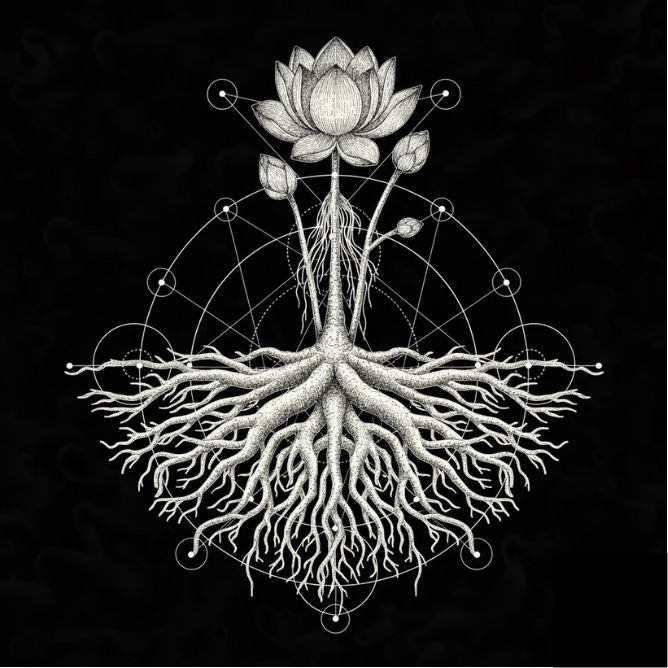
Our Choice
Source: Wiki
“The impossible happens.” — R. Buckminster Fuller
Our collective future remains a mystery. And yet, around the world there is a rising yearning for profound systemic change. Ignored by legacy institutions of politics, media, and technology, this yearning can be harnessed by those who provide a sincere, distributed, and coordinated avenue for direct participation in the reimagining of our world.
We call the bluff of narratives of progress and naive techno-optimism that tell us to stay home on Tik Tok, placing orders on Amazon while the world burns around us and our so-called leaders continue to shred the future of the rising Millennial and Gen Z generations through further extraction, military spending and indebtedness.
While we cannot predict when a large-scale planetary revolution will occur, we can prepare the soil for its optimal success. We envision the next Occupy Wall Street, Arab Spring, or Sunflower Movement occurring with the support of the civic utilities we create today. Instead of protesting corrupted and dying institutions, the defining movements of the 21st century can and must hold a positive image of the future that expands the scope of our imagination and guides our collective action towards creativity and experimentation.
In these uncertain times, civilizational collapse scenarios are abundant. From top-soil degradation and food system collapse to climate mass migration to extreme weather to biological warfare and the looming threat of mass global conflict, we can’t predict when and how our systems will collapse, but we can say with certainty that the long disaster of late stage capitalism has already begun.
As such, it is our responsibility as innovators and as a public to build the lifeboats and parallel systems that can catch humanity as it falls from one social order into another. It is both our ethical duty as well as our transformative opportunity to align, coordinate, resource, collaborate, convene, and learn as a global community developing the civic infrastructures of a world built upon love, care, and mutuality, empowering the public to co-steward and self-determine our collective future, together.
We began and end this series with a dedication: “In Us We Trust.” We end with a choice.
Our collective future remains a mystery. And yet, around the world there is a rising yearning for profound systemic change. This yearning can be harnessed by those who provide a sincere, distributed, and coordinated avenue for direct participation in the reimagining of our world.
We cannot predict when a large-scale planetary revolution will occur, but we can prepare the soil for its optimal success. Instead of protesting corrupted and dying institutions, the defining movements of the 21st century can hold a positive image of the future that expands the scope of our imagination and guides our collective action towards creativity and experimentation.
It is our responsibility as innovators and as a public to build the lifeboats and parallel systems that can catch humanity as it falls from one social order into another. It is both our ethical duty and our transformative opportunity to align, coordinate, resource, collaborate, convene, and learn as a global community developing the civic infrastructures of a world built upon love, care, and mutuality.
In Us We Trust.
Series:
Chapter 9: Open Civic Systems — Architecture & Transformation
Chapter 10: Open Civic Systems — Design Principles & Living Systems
Chapter 11: Our Choice ← This Chapter
Acknowledgements
Source: Wiki
This work is dedicated to all those who have carried the vision of a world grounded in consent, trust, and mutual benefit but did not live to see its ultimate fulfillment.
We extend our deepest gratitude to Timothy Archer, co-founder of OpenCivics. Without his early and significant contributions to the foundational concepts and architectures, OpenCivics may not have been birthed. His visionary work and initial efforts are the basis for many ideas within this thesis, network, and framework. Timothy’s unique role in laying many of its intellectual foundations remains deeply appreciated and honored.
We recognize that we also stand upon the shoulders of countless other individuals who have come before us, holding fast to the dream of a world that works for all. To those alive today who have chosen the challenging path of shifting human civilization toward a life-affirming future, we walk beside you, grateful for your courage and determination.
We are profoundly thankful for the guidance, wisdom, and insights offered by our mentors, peers, and collaborators. In particular, we extend a heartfelt thank you to Spencer Saar Cavanaugh, Richard Flyer, Aaron Brodeur, Charles Eisenstein, Erica Blair, Exeunt, Cameron Murdock, Sheri Herndon, Nathan Suits, Scott Morris, Ted Grand, Tracey Abbott, and Eric Lohela for their early feedback on this document. Their thoughtful input helped refine the ideas presented here, and their commitment to this work has been invaluable.
The current iteration of this document has been drafted, assembled and refined by OpenCivics co-founders Benjamin Life and Patricia Parkinson, who have taken great care to synthesize the multitude of contributions, inspirations, and feedback into what we believe is a seed of a coherent and actionable vision.
We also wish to acknowledge the broader intellectual and activist ecosystems that have informed the originality and creativity of this paper. Special thanks to the Sunflower and g0v Movements in Taiwan, the Democratic Autonomy movement in Rojava, The Pirate Party in Iceland, Partido De La Red in Argentina, Occupy Wall Street in the US, the Ada’itsx / Fairy Creek Blockade and Standing Rock movements, and the Sarvodaya Shramadana movement in Sri Lanka. The influence of Richard Flyer’s work on symbiotic culture, Joanna Macy’s “Great Turning” and the Work That Reconnects, Vandana Shiva’s Earth Democracy, and Buckminster Fuller’s visionary contributions, including Critical Path and Operating Manual For Spaceship Earth, are fundamental to the synthesis this document offers.
We further express our gratitude for the contributions of thinkers and doers that have expanded our understanding of complex design, civic, cooperation, and social systems, including Barbara Marx Hubbard, Kevin Owocki, Michel Bauwens, Sheri Herndon, Jamaica Stevens, Nora and Gregory Bateson, Daniel Schmachtenberger, Forrest Landry, Glen Weyl, Audrey Tang, Donella Meadows, Nathan Schneider, Margaret Wheatley, Christopher Life, Sophia Life, Ferananda Ibarra, Ilya Prigogine, Scott Morris, Toni Lane Casserly, Balaji Srinivasan, Primavera De Filippi, Raymond Powell, Joe Brewer, Samantha Sweetwater, Peter Russell, Adrienne Marie Brown, Nick Farr, David Graeber, Hanzi Freinacht, Ken Wilber, Tyson Yunkaporta, Jordan Hall, Jim Rutt, Exeunt, Elder Bill Jones, Satoshi Nakamoto, Vitalik Buterin, Zarinah Agnew, Christopher Alexander, Jacque Fresco, Joan Halifax, Albert Marshall, Pierre Teilhard de Chardin, Turquoise Sound, Roxanna Shohadaee, Nicolas Alcala, Ted Nelson, Jaron Lanier, Neri Oxman, Philip Shepherd, Niklas Luhmann, Jude Currivan, E.O. Wilson, Allen Saakyan, Tibet Sprague and Terran Collective, Herman Daly, Paul Watson, Bruce Mau, Otto Scharmer, Barbara Sher, Samantha Power, Edward West, Brandon Quittem, Reiki Cordon, Scarlet Masius, Anima LaVoy, Casey Fenton, Christopher Breedlove, David Casey, Stuart Cowan, Chelsea Restrum, David Sneider, Chris Cassano, Vital Sounouvou, Ashe Oro, Erica Blair, Sterlin Lujan, Marshal McLuhan, Dan Larimer, Brandon Graham Dempsey, Sadie Alwyn Moon, Fritjof Capra, Kevin Kelly, Caitlin Long, Jeff Stibel, Umberto Eco, Martin Keogh, Kenneth Mikkelsen, Richard Martin, Eric Hoffer, Vinay Gupta, Gary Dykstra, Francis Haugen, Dr. Zachary Stein, Nancy Stark Smith, Larry Harvey, Stuart Mangrum, Jordan Siegel, Nate Hagens, Susanna Choe, Gary Sheng, Jeff Emmett, and Phoebe Tickell.
A host of other visionary works and movements have also shaped this project, including the meta-crisis research of Kyle Kowalski, Charles Eisenstein’s Sacred Economics, the Bhutanese Gross National Happiness Index, Elinor Ostrom’s Governing the Commons, and the enduring lessons of the Black Panther Party’s free breakfast program. Each of these efforts has helped guide the evolution of the Open Civics Framework.
Their work has enriched this thesis, particularly in areas of peer production, mutualism, pluralism, design science, participatory democracy, systems theory, emergence, integral theory, transdisciplinary innovation, cognitive liberty, metamodernism, speculative futures, collaborative technology, ecopsychology, evolutionary conciousness, voluntarism, digital nations, ontological design, modular civic infrastructures, bioregionalism, all-win civic culture, hyperstructures, anarchist political philosophy, indigenous knowledge systems, value flows, commons governance, cybernetics, complexity science, and our civic renaissance.
For every person and effort named here, we honor and acknowledge the unseen and unnamed people who have contributed in myriad ways to the cultural substrate and scenius from which this work emerged.
Nice work, Benjamin! I recently built a system for Parallel Society. I would welcome your opinion .. on how well it maps to your writings.
https://github.com/herbstephens/Parallel-Society