


In our last chapter, we confronted the meta-crisis: the interconnected, self-reinforcing crises that collectively threaten human civilization. We saw how regulatory capture, multi-polar traps, and the tragedy of the commons combine to create feedback loops that increasingly undermine our collective capacity to address the very risks they generate.
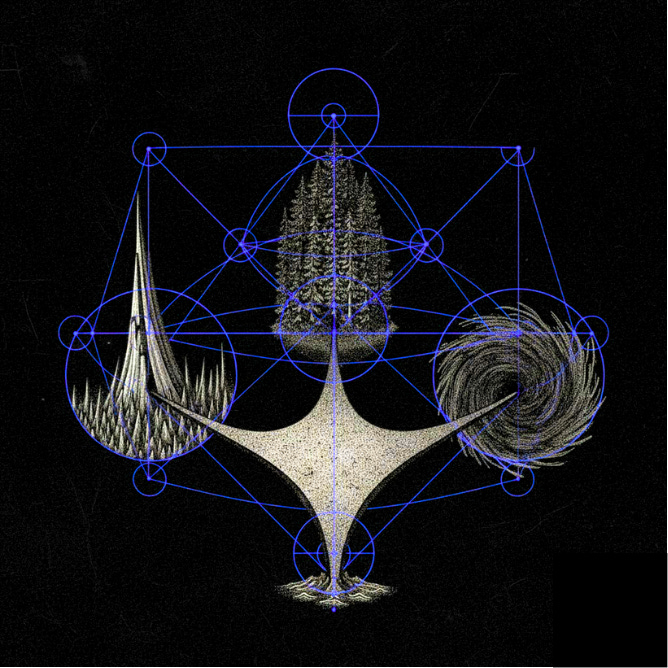
But understanding the problem isn’t enough. We need to understand where current dynamics are leading us. Drawing from chaos mathematics and game theory, we can identify the “basins of attraction” toward which our complex systems are moving — the probable futures that emerge from present conditions. There are three.
Prefer to read the full thesis? Read a PDF
systemic failure modes
The ways in which a system can fail due to inherent flaws or vulnerabilities within its structure, processes, or interactions. These failures are not isolated to individual components but arise from the complex interdependencies and interactions within the entire system. Identifying systemic failure modes involves analyzing how different parts of the system can collectively lead to failures, often requiring a holistic approach to understand and mitigate these risks.
To design whole systems alternatives that avoid reproducing these failure modes, it becomes necessary to review the game theoretic probable outcomes driven by these current systemic dynamics. Only with a sufficient understanding of the impending collapse scenarios that loom on the horizon can we successfully generate anti-fragile coordination mechanisms that are sufficient to meet the crises we face. Schmachtenberger refers to the three probable outcomes from current runaway feedback loops as “the three attractors.” The phrase “attractor” is a reference to chaos mathematics, a field of study regarding complex systems in which the number of and interactions between variables make linear models and predictions impossible. Attractors, or basins of attraction, refer to the bounds of a system which can be known even when the specific outcomes within those bounds are unknowable. While we can’t predict the exact outcomes of the nested and complex systems that are driving the meta-crisis, we can make a reasonably informed prediction of the future systemic equilibria that may emerge as these feedback loops reach the exponential curves that we are now approaching or, in some cases, have already entered. The three probable attractors that Schmachtenberger predicts based on his game-theoretic study of current dynamics are chaos, authoritarianism, and distributed coordination.
game theory
A branch of mathematics that studies strategic interactions where the outcomes depend on the actions of all participants. It provides tools for analyzing situations in which players make decisions that are interdependent, meaning each player’s strategy depends on the strategies of others. This field is widely used in economics, political science, psychology, and computer science to model and predict competitive behaviors and outcomes.
attractor
A reference to chaos mathematics, a field of study regarding complex systems in which the number of and interactions between variables make linear models and predictions impossible. Attractors, or basins of attraction, refer to the bounds of a system which can be known even when the specific outcomes within those bounds are unknowable.
In chaos theory, attractors are sets of numerical values toward which a system tends to evolve, regardless of the starting conditions of the system. These attractors represent the long-term behavior of a dynamical system.
The chaos attractor is defined by the collapse of institutions and centralized authorities under the weight of a plurality of distributed crises that fracture those institutions’ ability to maintain legitimacy and control. In the absence of a new, mutually accepted social order, systems devolve into tribalism and neo-feudalism with different clusters of actors vying for power, legitimacy, and control, likely at the regional scale. This attractor implies a high likelihood of not only civilizational collapse but potentially human extinction.
The authoritarian attractor is defined by a techno-fascist crack down on individual agency in order to retain a sense of social order in the face of accelerating breakdowns and crises. We see early stages of this attractor emerging with online censorship and the rise of both globalized corporate authoritarianism as well as hyper-nationalist elected leaders who have leveraged xenophobia and a strongman ethos to gain power and influence. While both of those expressions of authoritarianism position themselves as antagonists to one another, they are mirror expressions of the same authoritarian attractor. Elites around the globe likely prefer this attractor as it allows them to retain power and wealth as collapse scenarios accelerate.
Lastly, the distributed coordination attractor is defined by emergent, agent-centric self-organization that is able to provide localized resilience to rapidly changing circumstances through decentralized mechanisms. Schmachtenberger calls this system equilibrium “the third attractor,” a reference to the narrow path of systemic adaptation that simultaneously addresses the failure modes of our current systems while increasing the probability of avoiding the other two attractors. This attractor would result in a vast redistribution of wealth and agency, making it unappealing to elites but demonstrably more equitable, regenerative, and life-affirming than the other two possible attractors.
decentralized vs distributed
Decentralized systems distribute control and decision-making among multiple independent nodes without a central authority, exemplified by blockchain technology. In contrast, distributed systems spread tasks and data across multiple nodes that work together, often with a central coordinating authority, as seen in content delivery networks (CDNs). While both involve multiple nodes, the key difference lies in the presence or absence of central control.
self-organization
A process where some form of overall order arises from local interactions between parts of an initially disordered system. Sometimes referred to as spontaneous order in the social sciences.
A process where a system spontaneously forms an organized structure or pattern without external control. This phenomenon occurs through local interactions among the system’s components, often driven by feedback mechanisms. Self-organization is observed in various fields, including physics, chemistry, biology, and social sciences. Examples include the formation of snowflakes, flocking behavior in birds, and the emergence of market dynamics.
agent centric
A perspective or approach that emphasizes the role, experiences, and motivations of individual agents within a system. In the context of systems design, this can mean designing systems that orient around the behaviors and interactions of individual agents within a larger system, while providing mechanisms understanding how their actions influence and are influenced by the system as a whole.
In this context, it becomes an ethical and strategic necessity to orient humanity’s collective agency towards defining, designing, and deploying civic systems that create the enabling conditions for the third attractor.
Such systems would require three design principles to guide the development of modular, composable, and interoperable civic systems that optimize for the third attractor and avoid unintentionally reproducing the self-destructive qualities of our current civilization. Our critical path towards a life-affirming civilization is defined by self-correcting feedback loops, aligned incentives, and civic culture.
Self-correcting feedback loops refers to truly participatory democracy paired with a sufficiently educated public able to interpret the holistic impact of our collective agency. Distributed, powerful, collective agency is required to ensure that any unhealthy feedback loops that may emerge at any point in our collective future can be addressed and mitigated holistically. This can be achieved through direct democracy mechanisms, citizen assemblies, strong public education, traditional ecological knowledge and open socio-ecological data.
Aligned incentives refers to an incentive landscape in which individual self-interest is aligned with the collective interest of humanity and all Life on Earth. Pro-social incentives reward forms of value that create cascading benefits for humanity and the planet. Unlike our current incentive landscape which rewards extraction and enclosure of value, prosocial incentives reward contributions to the commons and markets that produce holistic well-being and mutual thriving. This can be achieved through an economic structure organized by a diverse array of different strategies like democratically governed worker-owned cooperatives, nature-backed currencies, and evaluative metrics like Gross National Happiness.
regenerative
The ability or tendency to regrow, renew, or restore, especially after being damaged or lost. This term is often used in various contexts such as biology, medicine, and environmental science. For example, regenerative medicine focuses on repairing or replacing damaged tissues and organs, while regenerative agriculture aims to restore soil health and ecosystem balance.
Civic culture refers to the revival of a commonly practiced culture of mutual stewardship and responsibility. Renewing our sense of mutuality and solidarity is a critical precursor to any of the downstream behavioral and socio-economic shifts described above. Deconstructing the weaponized culture war dynamics that are currently being leveraged to reduce collective agency by pitting identity groups against one another can be effectively achieved through the lens of bioregionalism. Bioregionalism represents a philosophy of mutual belonging to the places, watersheds, and biosphere we call home as a fundamental basis for solidarity. Civic utilities like informal solidarity networks, connected locally and globally, that share resources and provide grassroots coordination infrastructure for mutual benefit are among the tools that directly support this civic cultural renaissance.
Put together, these underlying systems design principles reflect what could also be called a “life-affirming civilization.”
living systems principles
The fundamental characteristics and behaviors of living organisms, viewed as complex, open systems. These systems are self-organizing and interact continuously with their environment, maintaining themselves through the flow of information, energy, and matter. Key principles include order, sensitivity or response to the environment, reproduction, adaptation, growth and development, homeostasis, energy processing, and evolution. These principles help to define what makes something “alive” and illustrate how living systems sustain and evolve over time.
Thus, this thesis attempts to offer a sketch of this design philosophy for distributed coordination, the basis of an open civics. This paper proposes an underlying participatory design methodology for self-organizing processes and resilient, place-based and cosmo-local infrastructures that provide the enabling conditions for a fundamentally post-capitalist and even post-nation-state human civilization. By providing an initial methodology that provides a process ontology for the fundamental elements, functions, and processes of distributed coordination, this thesis outlines both the core mechanisms of the OpenCivics Network as a set of emergent capabilities, as well as the Open Civic Innovation Framework as a coherent, overarching meta-framework for a participatory process of civilizational adaptation. By linking the many commons and peer-to-peer efforts to revitalize the civic design space, this framework provides a foundation for a fully distributed process, governed by those who engage in it.
This model is not intended to be complete or final in any sense, rather it offers a schelling point, a point of convergence and a starting point from which we might collectively, to coordinate the process of systemic adaptation and co-evolution.
This model is not intended to be complete or final in any sense, rather it offers a schelling point, a point of convergence and an underlying schema, to coordinate the process of systemic adaptation and co-evolution.
The third attractor — distributed coordination — represents humanity’s narrow path through the eye of the needle. It requires self-correcting feedback loops, aligned incentives, and a revitalized civic culture. But choosing this path isn’t naive optimism; it’s what we might call “post-tragic protopian audacity.” In our next chapter, we’ll explore what it means to hold grief and possibility simultaneously — and why imagination activism is essential to shifting what’s perceived as possible.
Series:
Chapter 6: The Three Attractors ← This Chapter
Chapter 7: A Post-Tragic Protopian Audacity
Chapter 8: Open Civic Culture
Chapter 9: Open Civic Systems — Architecture & Transformation
Chapter 10: Open Civic Systems — Design Principles & Living Systems
Chapter 11: Our Choice